Monday, February 22, 2010
Book #6 - The Red Tent, by Anita Diamant
Discussion Questions:
1. Discuss the marital dynamics of Jacob's family. He has four wives; compare his relationship with each woman?
2. What do you make of the relationships among the four wives?
3. Dinah is rich in "mothers." Discuss the differences or similarities in her relationship with each woman.
4. Childbearing and childbirth are central to The Red Tent. How do the fertility childbearing and birthing practices differ from contemporary life? How are they similar? How do they compare with your own experiences as a mother?
5. Discuss Jacob's role as a father. Does he treat Dinah differently from his sons? Does he feel differently about her? If so, how?
6. Female relationships figure largely in The Red Tent. Discuss the importance of Inna, Tabea, Werenro, and Meryt.
7. Dinah's point of view is often one of an outsider, an observer. What effect does this have on the narrative? What effect does this have on the reader?
8. In The Red Tent, we see Dinah grow from childhood to old age. Discuss how she changes and matures. What lessons does she learn from life? If you had to pick a single word to describe the sum of her life, what word would you choose? How would Dinah describe her own life experience?
(Questions issued by publisher.)
Happy reading!
x
Thursday, February 11, 2010
False start
Instead, write on your calendar in PERMANENT MARKER Tuesday 16th February.
We can do this girls!!!
Monday, February 8, 2010
First Wives 2010
Wake up bookclubbers - tomorrow night is the night!!!
The first meeting of The First Wives Book Club - 8pm tomorrow night at Chez Hewett.Be there or be in BIG trouble!!
Jen xx
Friday, October 30, 2009
The Secret Life of Bees - Deconstruction
Here's what she said:
The story: Sue Monk Kidd’s novel centres on the life of Lily Owens, a teenage girl, growing up in Southern America during the time the Civil Rights Act and the movement towards equality for the African American community. Although she lives with her father, T. Ray, Lily is practically an orphan and is haunted by the events surrounding her mother’s death 10 years prior.
After a ‘visit’ from a swarm of bees, Lily’s world is thrown into a frenzy, which sees her and her nanny, Rosaleen escape for Tiburon (A small town in South Carolina, which is Lily’s only real connection to her mother’s life).
In Tiburon, Lily and Rosaleen are taken in by the ‘calendar sisters’, August, June and May Boatwright – 3 African American sisters who not only are responsible for the famous ‘Black Madonna Honey’, but educate Lily in the ways of a world she has only ever seen from one point of view…
Peppered through the novel are references to the life of bees, which punctuate the events of each chapter beautifully, whilst also highlighting a ‘secret life’ we, the reader are unfamiliar with.
The climax of the story is Lily’s conversation with August about her mother and the subsequent final confrontation with her father, which leaves the events of Deborah’s deaths still in mystery, and Lily ultimately finds the life she has always wanted and discovers herself with a whole ‘hive’ of mothers.
The moral: There are many themes and messages which can be derived from “The Secret Life of Bees”, however two of the strongest is the importance of family and one’s ability to demonstrate tolerance. This is not just in the literal sense of tolerating each other’s differences, although the race relationships demonstrated throughout the novel definitely highlight this, it goes further to tolerating one’s self. When Lily was able to let go of the spirit of her mother whom, she kept on a pedestal, she was able to find peace with herself and her role in her mother’s death. Once she had done this, only then, was she able to see clearly that she had established herself within a loving family.
What is the ‘Secret Life of Bees’?: There are many ways this can be interpreted, however I personally believe that the secret life of bees is a term that can be used to describe ‘what goes on behind closed doors’. The analogy of a hive, which is dark and hidden from plain-view, where various activities occur, can be transferred to the notion of until you step over the threshold and into someone else’s life, you can only assume what happens. The ‘coloured folk’ may turn out to be ‘cultured’ or an abusive and distant father may have had kindness in his heart to begin with. As August suggests, “People may start out one way…”. From reading this book, I have taken away a stronger belief in not judging a person until I have walked in their shoes. Until you have done that, you must remember that your hive life may be filled with a buzz similar to theirs and nobody has the right to make assumptions about an individual, their family or their race until they have gained greater insight into their hive of activity.
Saturday, October 17, 2009
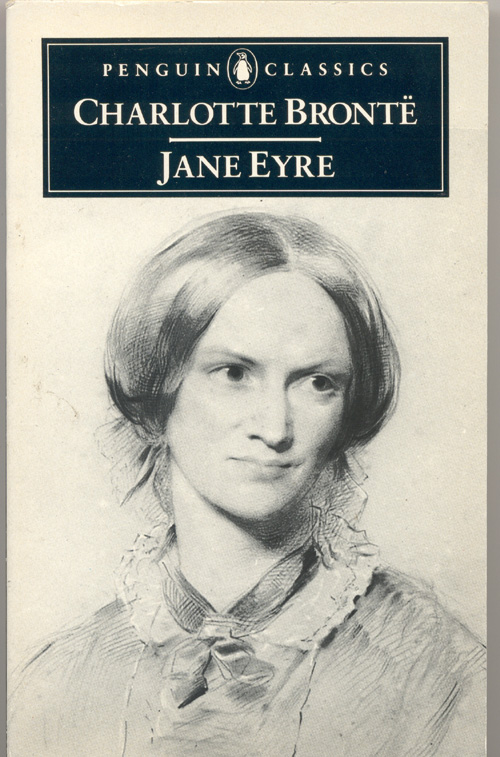
Book #5 - Jane Eyre, by Charlotte Bronte
And this month's book is...
Here's the questions to ponder while you're reading:
Book Club Discussion Questions
1. Why does Bronte juxtapose Jane's musings about women's social restraints with the mysterious laugh that Jane attributes to Grace Poole?
2. Rochester tells Jane, "if you are cast in a different mould to the majority, it is no merit of yours; Nature did it". Are we intended to agree or disagree with this statement?
3. After Mason's visit to Thornfield, Jane asks herself, "What crime was this, that lived incarnate in this sequestered mansion, and could neither be expelled nor subdued by the owner?". What crime does Bertha represent? Why does Rochester keep her at Thornfield?
4. Does Rochester ever actually intend to marry Blanche Ingram? If so, when does he change his mind? If not, why does he go to such lengths to make Jane believe he does?
5. Rochester's disastrous marriage to Bertha was based on passion, while St. John refuses to marry Rosamund because of his passion for her. What is Brontë saying about the role passion should play in marriage?
6. What does St. John feel for Jane? Why does Jane end her story with his prayer?
7. Jane asserts her equality to Rochester, and St. John. What does Jane mean by equality, and why is it so important to her?
8. When Jane first appears at Moor House, Hannah assumes she is a prostitute, but St. John and his sisters do not. What distinguishes the characters who misjudge Jane from those who recognize her true nature?
9. When Jane hears Rochester's voice calling while he is miles away, she says the phenomenon "is the work of nature". What does she mean by this? What are we intended to conclude about the meaning of this experience?
10. Brontë populates the novel with many female characters roughly the same age as Jane—Georgiana and Eliza Reed, Helen Burns, Blanche Ingram, Mary and Diana Rivers, and Rosamund Oliver. How do comparisons with these characters shape the reader's understanding of Jane's character?
11. What is the balance of power between Jane and Rochester when they marry? Does this balance change from the beginning of the marriage to the time ten years later that Jane describes at the end of the novel?
12. In a romantic relationship, does one partner inevitably dominate the other?
13. Should an individual who holds a position of authority be granted the respect of others, regardless of his or her character?
(This set of questions issued by Penguin Classics Edition.)
Happy reading to all the First Wives!!
Thursday, September 10, 2009
Book #4 - The Secret Life of Bees, by Sue Monk Kidd
But for now, here are some questions to ponder as you read The Secret Life of Bees:
Discussion Questions:
1. Were you surprised to learn that T. Ray used to be different, that once he truly loved Deborah? How do you think Deborah's leaving affected him? Did it shed any light on why T. Ray was so cruel and abusive to Lily?
2. Had you ever heard of "kneeling on grits"? What qualities did Lily have that allowed her to survive, endure, and eventually thrive, despite T. Ray?
3. Who is the queen bee in this story?
4. Lily's relationship to her dead mother was complex, ranging from guilt to idealization, to hatred, to acceptance. What happens to a daughter when she discovers her mother once abandoned her? Is Lily right—would people generally rather die than forgive? Was it harder for Lily to forgive her mother or herself?
5. Lily grew up without her mother, but in the end she finds a house full of them. Have you ever had a mother figure in your life who wasn't your true mother? Have you ever had to leave home to find home?
6. What compelled Rosaleen to spit on the three men's shoes? What does it take for a person to stand up with conviction against brutalizing injustice? What did you like best about Rosaleen?
7. Had you ever heard of the Black Madonna? What do you think of the story surrounding the Black Madonna in the novel? How would the story be different if it had been a picture of a white Virgin Mary? Do you know women whose lives have been deepened or enriched by a connection to an empowering Divine Mother?
8. Why is it important that women come together? What did you think of the "Calendar Sisters" and the Daughters of Mary? How did being in the company of this circle of females transform Lily?
9. May built a wailing wall to help her come to terms with the pain she felt. Even though we don't have May's condition, do we also need "rituals," like wailing walls, to help us deal with our grief and suffering?
10. How would you describe Lily and Zach's relationship? What drew them together? Did you root for them to be together?
11. Project into the future. Does Lily ever see her father again? Does she become a beekeeper? A writer? What happens to Rosaleen? What happens to Lily and Zach? Who would Zach be today?
Thursday, August 20, 2009
The Five People You Meet in Heaven - Deconstruction
A little overdue, but as I’ve been honoured with the task of putting together a brief overview of The Five People You Meet in Heaven, by Mitch Albom, which was Book #2 for The First Wives.
Review from My Mum: This book was not as weird as The Lovely Bones. (Not my thoughts, but had to put that in. I’m calling mum an honorary First Wife as she’s not an official part of the club, but is reading all the books.)
Eddie’s Story: The story centres around Eddie. A theme park maintenance supervisor who has filled his life with regrets and convinced himself he has not achieved anything in life. He seems to have lived his life blaming other people for every event that’s happened or situation that he’s been in, without making the most of it. This is until he dies, and then meets five obscure people who played key roles in his life. They each showed him the part they played, and he realised why certain things happened in his life, and how his reaction to those events and situations affected his life and those around him. He finally finds the meaning and purpose he felt he never had – albeit a bit too late.
Moral to the Story: There is a definite moral to this story. Don’t waste your life thinking about what could’ve been or should’ve been. Things happen – sometimes positive, sometimes negative. We all need to give ourselves time to acknowledge what happens and adjust accordingly – but then should accept and move on the best we can. A whole life can be wasted blaming others or ourselves on our situations. In the end there’s only one person that can change it or make it work – US!
Overall Review: This is not a book I would normally have picked up, however I was immediately captured by the suspense the author managed to create. A good read – definitely book club material. I wouldn’t have got anywhere near as much out of it had it not been discussed with the wonderful First Wives. A special acknowledgement to (almost) First Wife Vanessa’s analysis of the five people representing different religious icons and basic beliefs. Well done, Vanessa – gave us all a different perspective (and new standard to live up to for our discussion!) Overall score of 3.5/5.
5 People I’d Like to Meet in Heaven: This is written on the belief that after I meet these 5 people, I can join my family/friends in joyous eternity. Not necessarily in this order.
1 – Johnny Depp, for one night of fantasy driven passion (time goes slow in heaven, doesn’t it?)
2 – Lance Armstrong, to be inspired and work out where such strength (both physical and mental) comes from.
3 – Harry Potter, to learn some magic.
4 – Pink, for a party and spot of karaoke (of course I’ll be able to sing in heaven).
5 – Oprah, for cake, coffee, gossip and girl talk.
No morals to the story there, but gee it’d be fun wouldn’t it?