
This is a catch up post - no time for chit chat. None of the first wives loved this book, or even liked it much. Let's move on!
x
Friday, September 24, 2010

Wednesday, March 31, 2010
Book #7 - The Time Traveler's Wife - Audrey Niffenegger
The First Wives all have high hopes for our latest book club read:

1. Why do you think Niffenegger used the title The Time Traveler's Wife instead of just The Time Traveler?
2. The story is sometimes told by Clare, sometimes by Henry. Did you like how it was organized? How did their different perspectives help you understand their love?
3. For Clare, there is always a sense of waiting. Discuss the different ways she is waiting throughout the story. What roles do longing, anticipation and absence play?
4. Who is your favorite character?
5. How does their desire for a child affect their relationship?
6. Do you believe Alba will have a better life than Henry? How is her perspective on time travel different than his?
7. How is their relationship changed by the fact that they experience events at different times--I.E. Clare experiences in her childhood what Henry will not experience for decades?
8. Is this story fatalistic?
9. Do you agree with Henry's rule of keeping the future a secret from himself so he can live as normal a life as possible? Discuss the times that he breaks this rule and whether you think those are good decisions.
10. Did you like the ending?
11. Rate this book on a scale of one to five.
Happy reading everyone!
Monday, February 22, 2010
Book #6 - The Red Tent, by Anita Diamant
Congratulations First Wives, we have our first book club read for 2010!
1. Discuss the marital dynamics of Jacob's family. He has four wives; compare his relationship with each woman?
2. What do you make of the relationships among the four wives?
3. Dinah is rich in "mothers." Discuss the differences or similarities in her relationship with each woman.
4. Childbearing and childbirth are central to The Red Tent. How do the fertility childbearing and birthing practices differ from contemporary life? How are they similar? How do they compare with your own experiences as a mother?
5. Discuss Jacob's role as a father. Does he treat Dinah differently from his sons? Does he feel differently about her? If so, how?
6. Female relationships figure largely in The Red Tent. Discuss the importance of Inna, Tabea, Werenro, and Meryt.
7. Dinah's point of view is often one of an outsider, an observer. What effect does this have on the narrative? What effect does this have on the reader?
8. In The Red Tent, we see Dinah grow from childhood to old age. Discuss how she changes and matures. What lessons does she learn from life? If you had to pick a single word to describe the sum of her life, what word would you choose? How would Dinah describe her own life experience?
(Questions issued by publisher.)
Happy reading!
x

1. Discuss the marital dynamics of Jacob's family. He has four wives; compare his relationship with each woman?
2. What do you make of the relationships among the four wives?
3. Dinah is rich in "mothers." Discuss the differences or similarities in her relationship with each woman.
4. Childbearing and childbirth are central to The Red Tent. How do the fertility childbearing and birthing practices differ from contemporary life? How are they similar? How do they compare with your own experiences as a mother?
5. Discuss Jacob's role as a father. Does he treat Dinah differently from his sons? Does he feel differently about her? If so, how?
6. Female relationships figure largely in The Red Tent. Discuss the importance of Inna, Tabea, Werenro, and Meryt.
7. Dinah's point of view is often one of an outsider, an observer. What effect does this have on the narrative? What effect does this have on the reader?
8. In The Red Tent, we see Dinah grow from childhood to old age. Discuss how she changes and matures. What lessons does she learn from life? If you had to pick a single word to describe the sum of her life, what word would you choose? How would Dinah describe her own life experience?
(Questions issued by publisher.)
Happy reading!
x
Thursday, February 11, 2010
False start
Okay, okay, it was going to be Tuesday 9th February - cancel that!!
Instead, write on your calendar in PERMANENT MARKER Tuesday 16th February.
We can do this girls!!!
Instead, write on your calendar in PERMANENT MARKER Tuesday 16th February.
We can do this girls!!!
Monday, February 8, 2010
First Wives 2010
Wake up bookclubbers - tomorrow night is the night!!!

Be there or be in BIG trouble!!
Jen xx
Friday, October 30, 2009
The Secret Life of Bees - Deconstruction
Our lovely future First Wife, Vanessa, kindly provided a review for 'Bees'. A former literature student, Vanessa may well have just raised the bar for our book reviews. Thanks Ness!!
Here's what she said:
The story: Sue Monk Kidd’s novel centres on the life of Lily Owens, a teenage girl, growing up in Southern America during the time the Civil Rights Act and the movement towards equality for the African American community. Although she lives with her father, T. Ray, Lily is practically an orphan and is haunted by the events surrounding her mother’s death 10 years prior.
After a ‘visit’ from a swarm of bees, Lily’s world is thrown into a frenzy, which sees her and her nanny, Rosaleen escape for Tiburon (A small town in South Carolina, which is Lily’s only real connection to her mother’s life).
In Tiburon, Lily and Rosaleen are taken in by the ‘calendar sisters’, August, June and May Boatwright – 3 African American sisters who not only are responsible for the famous ‘Black Madonna Honey’, but educate Lily in the ways of a world she has only ever seen from one point of view…
Peppered through the novel are references to the life of bees, which punctuate the events of each chapter beautifully, whilst also highlighting a ‘secret life’ we, the reader are unfamiliar with.
The climax of the story is Lily’s conversation with August about her mother and the subsequent final confrontation with her father, which leaves the events of Deborah’s deaths still in mystery, and Lily ultimately finds the life she has always wanted and discovers herself with a whole ‘hive’ of mothers.
The moral: There are many themes and messages which can be derived from “The Secret Life of Bees”, however two of the strongest is the importance of family and one’s ability to demonstrate tolerance. This is not just in the literal sense of tolerating each other’s differences, although the race relationships demonstrated throughout the novel definitely highlight this, it goes further to tolerating one’s self. When Lily was able to let go of the spirit of her mother whom, she kept on a pedestal, she was able to find peace with herself and her role in her mother’s death. Once she had done this, only then, was she able to see clearly that she had established herself within a loving family.
What is the ‘Secret Life of Bees’?: There are many ways this can be interpreted, however I personally believe that the secret life of bees is a term that can be used to describe ‘what goes on behind closed doors’. The analogy of a hive, which is dark and hidden from plain-view, where various activities occur, can be transferred to the notion of until you step over the threshold and into someone else’s life, you can only assume what happens. The ‘coloured folk’ may turn out to be ‘cultured’ or an abusive and distant father may have had kindness in his heart to begin with. As August suggests, “People may start out one way…”. From reading this book, I have taken away a stronger belief in not judging a person until I have walked in their shoes. Until you have done that, you must remember that your hive life may be filled with a buzz similar to theirs and nobody has the right to make assumptions about an individual, their family or their race until they have gained greater insight into their hive of activity.
Here's what she said:
The story: Sue Monk Kidd’s novel centres on the life of Lily Owens, a teenage girl, growing up in Southern America during the time the Civil Rights Act and the movement towards equality for the African American community. Although she lives with her father, T. Ray, Lily is practically an orphan and is haunted by the events surrounding her mother’s death 10 years prior.
After a ‘visit’ from a swarm of bees, Lily’s world is thrown into a frenzy, which sees her and her nanny, Rosaleen escape for Tiburon (A small town in South Carolina, which is Lily’s only real connection to her mother’s life).
In Tiburon, Lily and Rosaleen are taken in by the ‘calendar sisters’, August, June and May Boatwright – 3 African American sisters who not only are responsible for the famous ‘Black Madonna Honey’, but educate Lily in the ways of a world she has only ever seen from one point of view…
Peppered through the novel are references to the life of bees, which punctuate the events of each chapter beautifully, whilst also highlighting a ‘secret life’ we, the reader are unfamiliar with.
The climax of the story is Lily’s conversation with August about her mother and the subsequent final confrontation with her father, which leaves the events of Deborah’s deaths still in mystery, and Lily ultimately finds the life she has always wanted and discovers herself with a whole ‘hive’ of mothers.
The moral: There are many themes and messages which can be derived from “The Secret Life of Bees”, however two of the strongest is the importance of family and one’s ability to demonstrate tolerance. This is not just in the literal sense of tolerating each other’s differences, although the race relationships demonstrated throughout the novel definitely highlight this, it goes further to tolerating one’s self. When Lily was able to let go of the spirit of her mother whom, she kept on a pedestal, she was able to find peace with herself and her role in her mother’s death. Once she had done this, only then, was she able to see clearly that she had established herself within a loving family.
What is the ‘Secret Life of Bees’?: There are many ways this can be interpreted, however I personally believe that the secret life of bees is a term that can be used to describe ‘what goes on behind closed doors’. The analogy of a hive, which is dark and hidden from plain-view, where various activities occur, can be transferred to the notion of until you step over the threshold and into someone else’s life, you can only assume what happens. The ‘coloured folk’ may turn out to be ‘cultured’ or an abusive and distant father may have had kindness in his heart to begin with. As August suggests, “People may start out one way…”. From reading this book, I have taken away a stronger belief in not judging a person until I have walked in their shoes. Until you have done that, you must remember that your hive life may be filled with a buzz similar to theirs and nobody has the right to make assumptions about an individual, their family or their race until they have gained greater insight into their hive of activity.
Saturday, October 17, 2009
Book #5 - Jane Eyre, by Charlotte Bronte
And this month's book is...
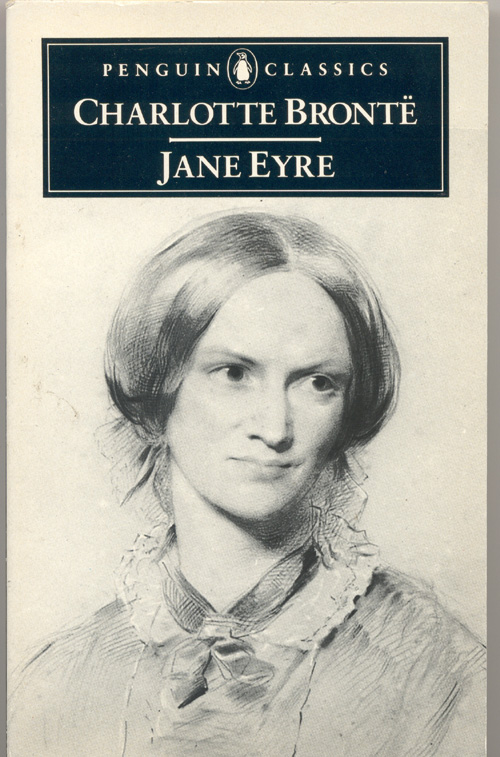
Here's the questions to ponder while you're reading:
Book Club Discussion Questions
1. Why does Bronte juxtapose Jane's musings about women's social restraints with the mysterious laugh that Jane attributes to Grace Poole?
2. Rochester tells Jane, "if you are cast in a different mould to the majority, it is no merit of yours; Nature did it". Are we intended to agree or disagree with this statement?
3. After Mason's visit to Thornfield, Jane asks herself, "What crime was this, that lived incarnate in this sequestered mansion, and could neither be expelled nor subdued by the owner?". What crime does Bertha represent? Why does Rochester keep her at Thornfield?
4. Does Rochester ever actually intend to marry Blanche Ingram? If so, when does he change his mind? If not, why does he go to such lengths to make Jane believe he does?
5. Rochester's disastrous marriage to Bertha was based on passion, while St. John refuses to marry Rosamund because of his passion for her. What is Brontë saying about the role passion should play in marriage?
6. What does St. John feel for Jane? Why does Jane end her story with his prayer?
7. Jane asserts her equality to Rochester, and St. John. What does Jane mean by equality, and why is it so important to her?
8. When Jane first appears at Moor House, Hannah assumes she is a prostitute, but St. John and his sisters do not. What distinguishes the characters who misjudge Jane from those who recognize her true nature?
9. When Jane hears Rochester's voice calling while he is miles away, she says the phenomenon "is the work of nature". What does she mean by this? What are we intended to conclude about the meaning of this experience?
10. Brontë populates the novel with many female characters roughly the same age as Jane—Georgiana and Eliza Reed, Helen Burns, Blanche Ingram, Mary and Diana Rivers, and Rosamund Oliver. How do comparisons with these characters shape the reader's understanding of Jane's character?
11. What is the balance of power between Jane and Rochester when they marry? Does this balance change from the beginning of the marriage to the time ten years later that Jane describes at the end of the novel?
12. In a romantic relationship, does one partner inevitably dominate the other?
13. Should an individual who holds a position of authority be granted the respect of others, regardless of his or her character?
(This set of questions issued by Penguin Classics Edition.)
Happy reading to all the First Wives!!
Subscribe to:
Posts (Atom)
